Drywood termite localized treatment serves as an engineered defense for isolated structural infestations throughout Los Angeles County. Unlike subterranean termites that require soil contact, drywood colonies live…
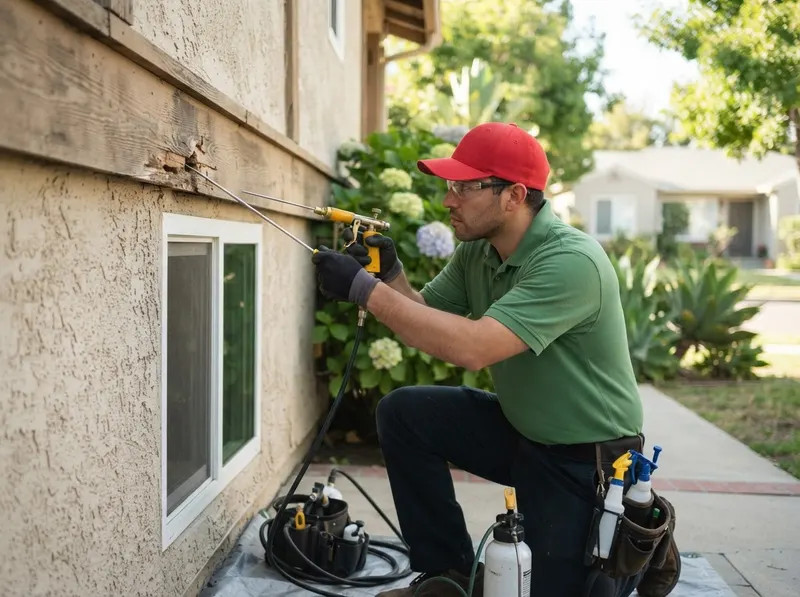
Drywood termite localized treatment serves as an engineered defense for isolated structural infestations throughout Los Angeles County. Unlike subterranean termites that require soil contact, drywood colonies live entirely within structural timber, entering through attic vents, exposed fascia, and exterior siding. Localized treatment isolates active galleries through precision drill-and-inject procedures, introducing targeted non-repellent termiticides or penetrating borate formulations directly into the colony network. This method eliminates the specific nesting site while avoiding the extensive preparation, chemical displacement, and multi-day hotel stays associated with structural gas fumigation. The minimum service baseline is $250, with final costs determined by the number of active kick-out points and the total linear feet of infested timber.
Selecting a localized spot application over full-structure fumigation depends on colony distribution. Spot treatment fits localized infestations discovered in window trims, rafters, or garage door jambs, typically signaled by distinct hex-sided fecal pellets (frass) accumulating on surfaces below a single emergence hole. If acoustic detection or tactile probing reveals multi-room infestation pathways spreading inside inaccessible wall framing, whole-structure containment becomes necessary. The strategic trade-off balances surgical speed against hidden perimeter reach: localized remediation protects the living space and clears verified zones within 2 to 4 hours, whereas fumigation secures closed wall cavities at the expense of home vacating, food removal, and exterior perimeter shrub clearance.
Local architectural styles across Culver City dictate specific timber vulnerability profiles. In Blanco-Culver Crest and Carlson Park, mid-century residential framing often features exposed open-beam ceilings and Douglas fir rafters that allow termites direct access via rooflines near mature canopy trees. Sunkist Park and Studio Village properties with original wood rafter tails and crawl space subflooring face gallery intrusion along exterior eave perimeters. Along Ballona Creek corridors and damp marine-layer channels through Culver West, damp evening conditions drive post-swarm pairings into unprotected exterior fascia boards. Technicians locate kick-out holes, drill small 1/8-inch access ports into the core wood chambers, pressure-inject non-repellent active ingredients to collapse the colony, and seal every entry port with structural wood dowels to prevent re-infestation.
Every job gets a firm, written price after a free on-site visit.
Tell us about your drywood termite localized treatment job in Culver City and we'll send a clear, written quote, usually the same day.
 PestFence Pest Control