Bed bug thermal and contact remediation operates on an integrated physical eradication protocol designed for structural enclosures. Thermal remediation circulates high-output, thermostatically controlled forced air…
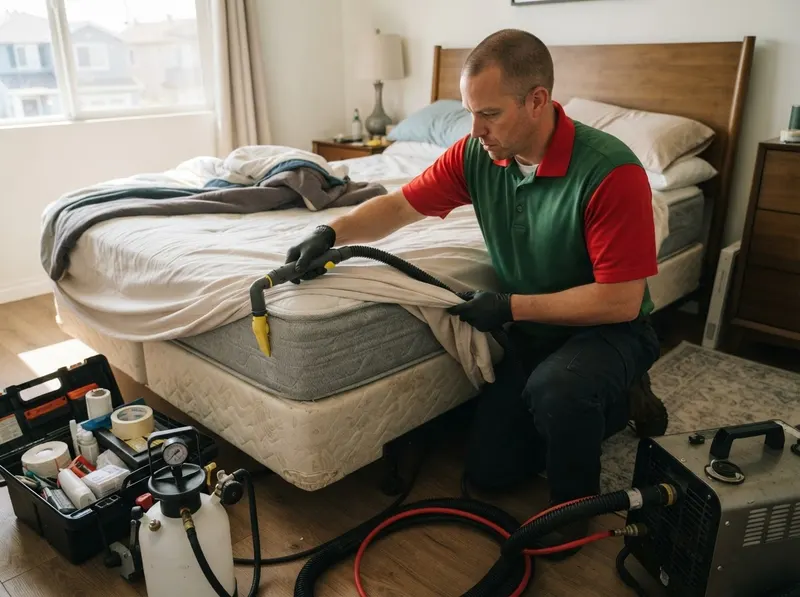
Bed bug thermal and contact remediation operates on an integrated physical eradication protocol designed for structural enclosures. Thermal remediation circulates high-output, thermostatically controlled forced air through targeted rooms, sustaining core ambient temperatures between 120°F and 135°F. This thermal threshold penetrates insulated box springs, thick baseboards, and structural wall framing, denaturing the essential physiological proteins in adult bed bugs, nymphs, and dormant eggs. In situations where localized thermal dispersal faces dense construction materials or adjoining party walls, such as multi-family apartment communities in Fox Hills, Studio Village, or historic homes near Carlson Park, direct contact remediation acts as the necessary perimeter complement. Technicians apply targeted mechanical desiccants like amorphous silica gel alongside EPA-registered contact barriers into electrical junction boxes, hollow baseboard seams, and structural subfloor thresholds, preventing lateral migration into neighboring living spaces.
Selecting integrated thermal remediation over conventional repetitive surface spraying addresses the underlying nesting voids that standard retail sprays miss. Chemical-only liquid sprays rely on insects crossing a dried chemical deposit; bed bugs frequently detect chemical barriers and retreat deeper into plaster walls, under hardwood floorboards, or along plumbing conduits. In contrast, convective heat currents penetrate hidden voids without driving pests through shared walls into adjacent units. The practical trade-off centers on preparation and structural exposure: thermal remediation requires homeowners and property managers to remove meltable plastics, pressurized aerosols, and temperature-sensitive electronics before service, whereas pure contact treatments require repetitive visits spaced across 14-day egg-hatch cycles.
Structural variations across Culver City dictate specific procedural adaptations. Residences situated along the humid riparian corridor of the Ballona Creek Bike Path, including single-story properties in Sunkist Park and Park West, require focused dehumidification monitoring during thermal cycles to maintain convective transfer efficiency. For hillside residences in Blanco-Culver Crest or mixed-use loft properties in Downtown Culver City and the Lucerne-Higuera arts district, building construction requires localized power planning. Service utilizes industrial 460-volt electric heaters powered by auxiliary external generators or direct heavy-duty distribution panels, eliminating voltage strain on domestic wiring. Step 1 involves an initial optical inspection to confirm harborages. Step 2 requires tenant or homeowner prep under a structured checklist. Step 3 initiates monitored convective heating with perimeter contact seals, completing the structural clearance without broadcast chemical inundation.
Every job gets a firm, written price after a free on-site visit.
Tell us about your bed bug thermal and contact remediation job in Culver City and we'll send a clear, written quote, usually the same day.
 PestFence Pest Control